MedFirst supplies CE-marked Sengstaken-Blakemore tubes from two manufacturers. The Marquat 3-channel PVC tube is manufactured in France and available in four sizes, from infant to adult, supplied in boxes of 5. The Create Medic silicone range covers four models, types 32, 42, 52 and 53. Both ranges are intended for the mechanical tamponade of bleeding oesophageal varices in emergency settings.
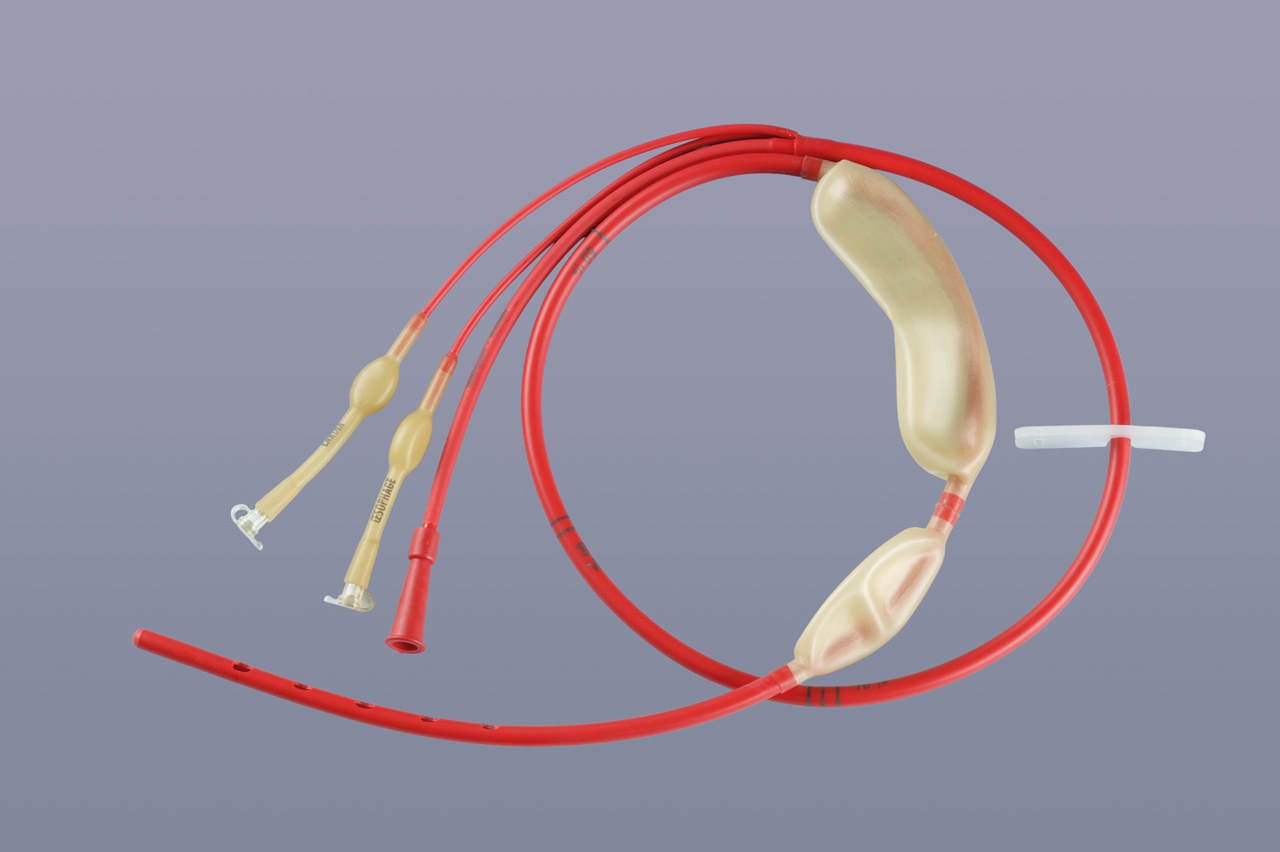
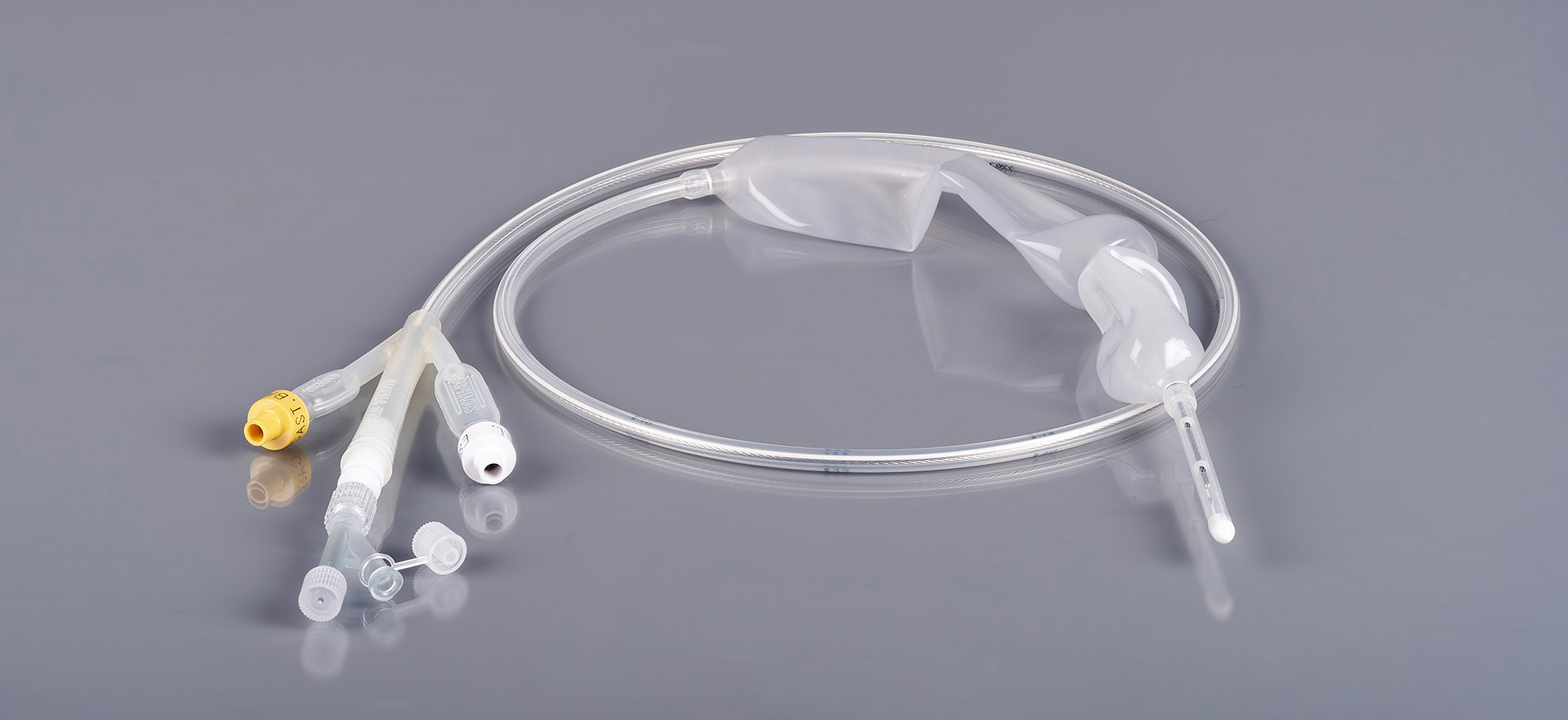
Manufactured in France by Marquat Génie Biomédical, the C120PVCS is a graduated three-channel tube combining a PVC shaft with two natural latex balloons. One channel is dedicated to gastric aspiration, the two others to inflation of the oesophageal and gastric balloons.
This tube is indicated for the haemostasis of bleeding oesophageal varices by mechanical tamponade, in emergency situations where conventional first-line treatments have failed or are unavailable.
The inflated oesophageal balloon applies direct compression to the varices, while the gastric (cardia) balloon anchors the tube against the gastric fundus and maintains its correct position.
| Reference | Patient | Min. length | Outer diameter | Size | Oesophageal balloon | Gastric balloon |
| C12014PVCS | Infant | 60 cm | approx. 4.60 mm | 14 CH | 15 mL max. | 40 mL max. |
| C12016PVCS | Child | 100 cm | approx. 5.30 mm | 16 CH | 25 mL max. | 50 mL max. |
| C12018PVCS | Adult | 100 cm | approx. 6.00 mm | 18 CH | 35 mL max. | 100 mL max. |
| C12020PVCS | Adult | 125 cm | approx. 6.60 mm | 20 CH | 50 mL max. | 150 mL max. |
| Reference | Oesophageal balloon | Gastric balloon |
| C12014PVCS | approx. 74 mm | approx. 43 mm |
| C12016PVCS | approx. 98 mm | approx. 45 mm |
| C12018PVCS | approx. 110 mm | approx. 54 mm |
| C12020PVCS | approx. 140 mm | approx. 68 mm |
Inflation volumes. The C120PVCS is specified by inflation volumes only. The manufacturer does not claim any nominal, maximum or recommended balloon pressure for this device. Effective pressure on the tissue depends on the injected volume, on individual balloon compliance, on patient anatomy and on the traction applied to the tube. Care must be taken to avoid overinflation and oesophageal trauma. Refer to the manufacturer's instructions for use.
Natural latex. The balloons of this tube are made of natural latex. Do not use in patients with a known latex allergy.
Lubrication. Do not use fatty lubricants or petroleum jelly, which may damage the latex balloons. Use a silicone gel or emulsion. Refer to the manufacturer's instructions for use.
Request a quote for the Marquat tube Technical PDFThe two ranges differ mainly in their materials. The Marquat tube combines a PVC shaft with natural latex balloons, whereas the Create Medic models are made entirely of silicone, balloons included.
The PVC shaft offers a compromise between rigidity and flexibility, which facilitates introduction and guidance of the tube during insertion. Natural latex balloons provide high elasticity and adapt readily to the surrounding tissue on inflation. Latex remains widely used by manufacturers of oesophageal tamponade tubes because of its mechanical properties suited to this application. Published case reports have described insertion difficulties with all-silicone tubes, including kinking of the shaft during advancement through the oesophagus. These observations illustrate differences in mechanical behaviour between materials and do not call into question the conformity or safety of the devices concerned when used according to their instructions for use.
| Reference | Size | Stock |
| 800.320.0150 | 15Fr | |
| 800.320.0160 | 16Fr | In stock |
| 800.320.0180 | 18Fr | In stock |
| 800.320.0210 | 21Fr | In stock |
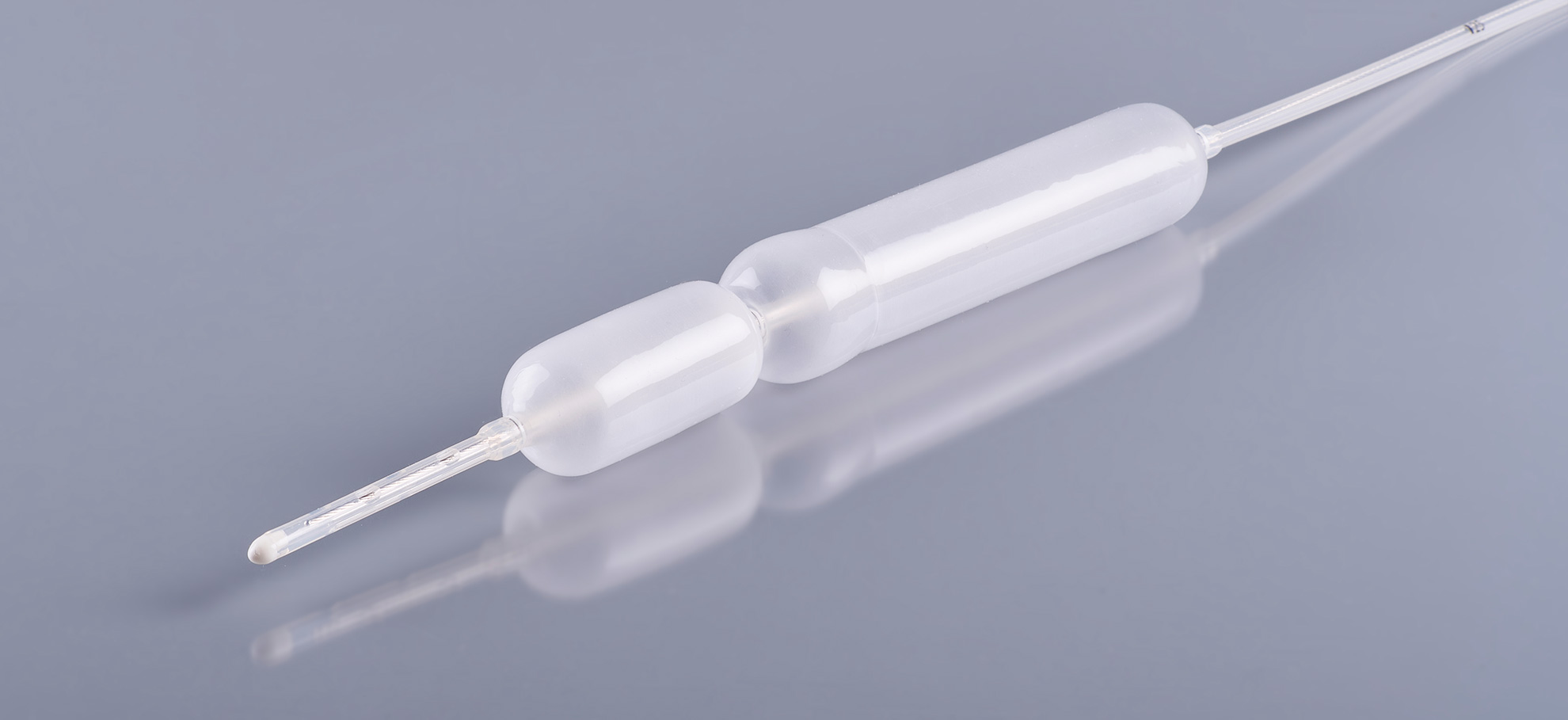
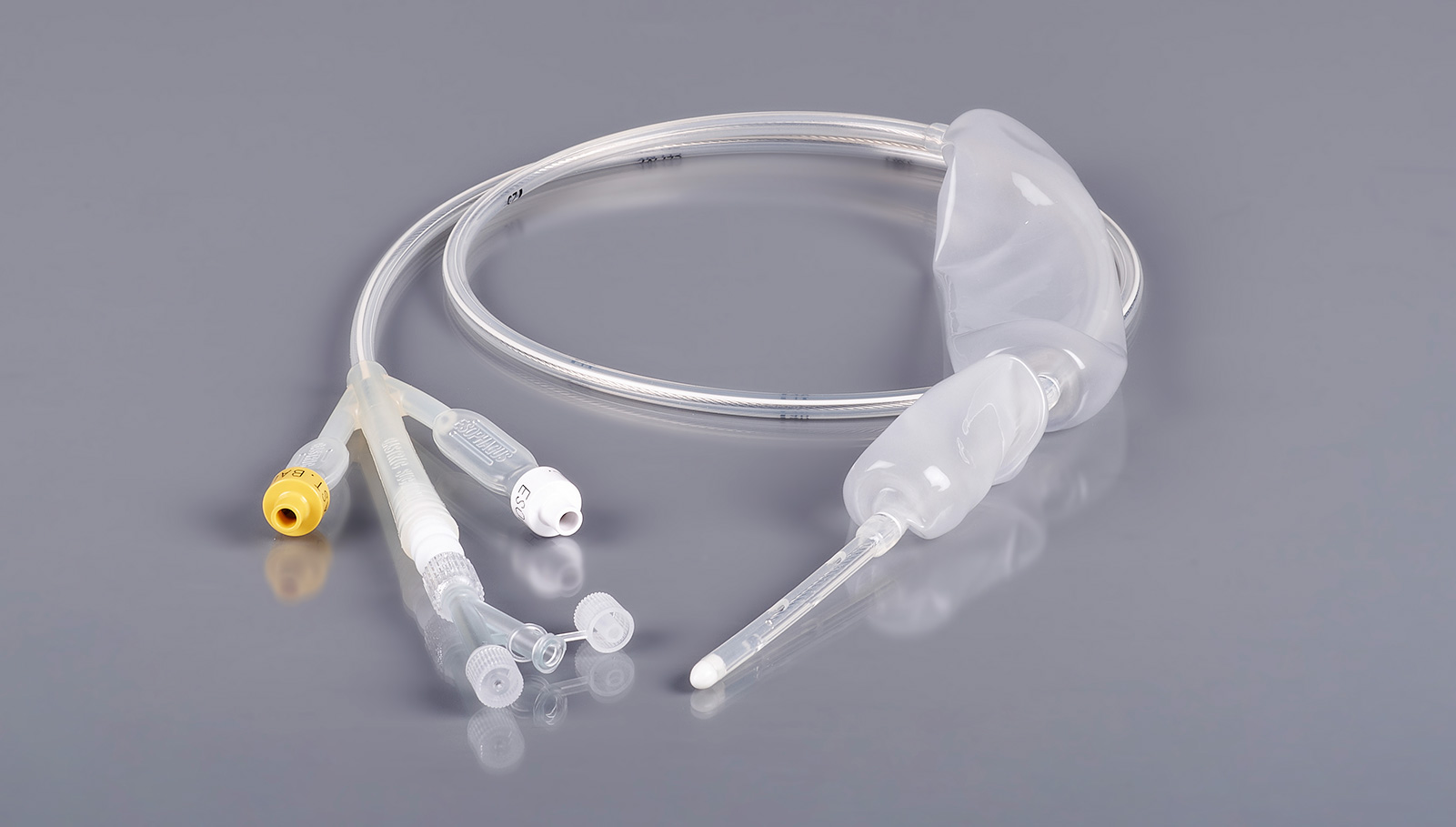
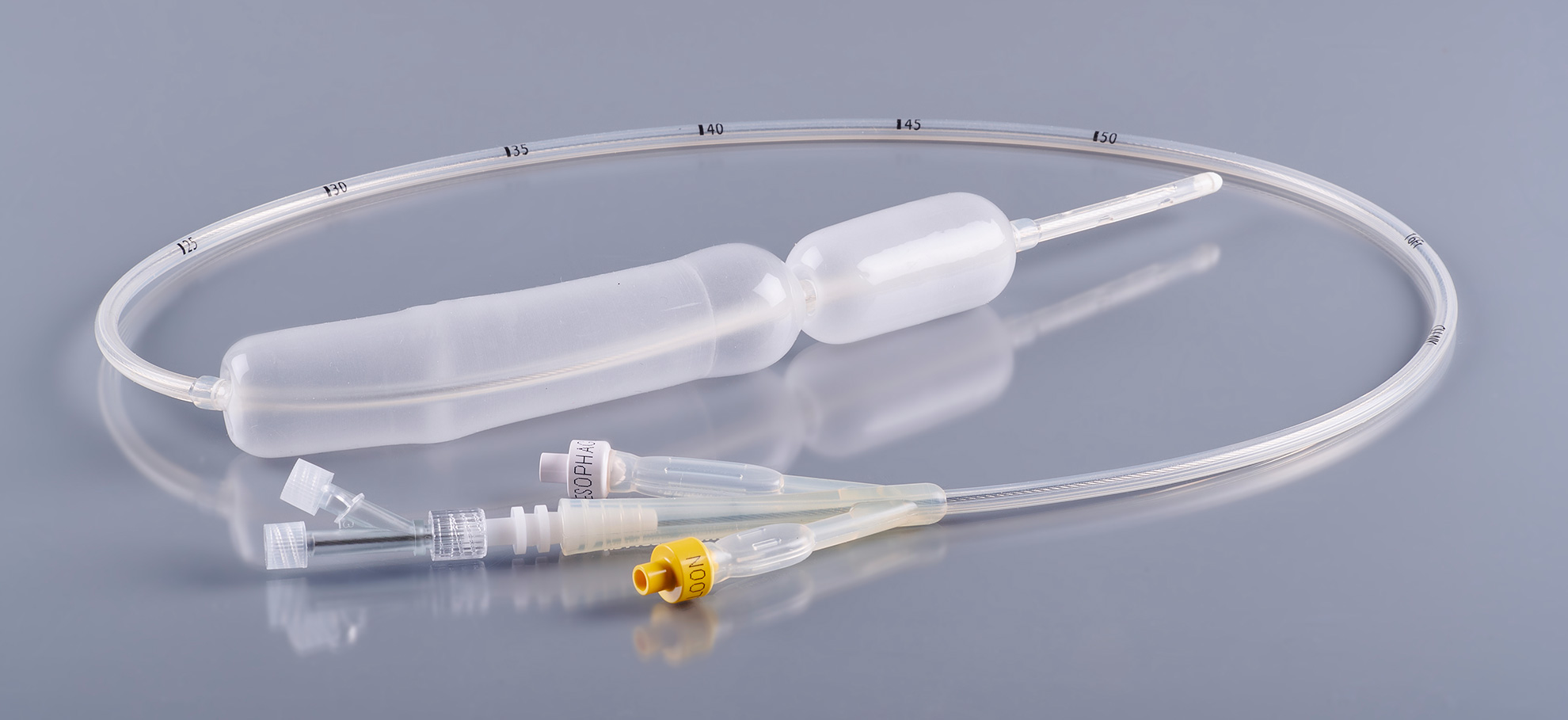
The Blakemore type 32 tube is made of 100% pure silicone, offering high biocompatibility. It is equipped with two balloons for hemostasis of esophageal varices under pressure and for gastric content suction. Key specifications include:
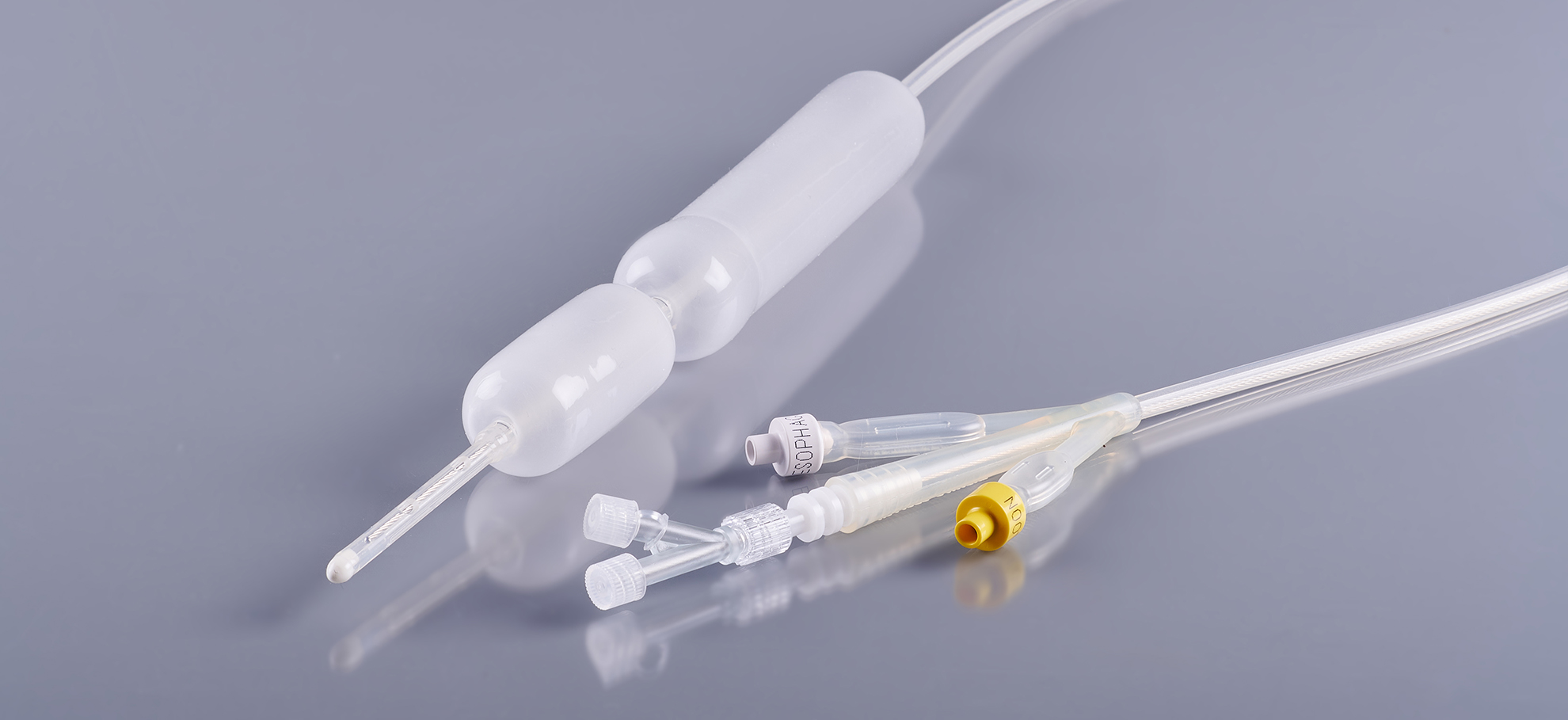
Entirely made of silicone,
the tube is extremely flexible and can be inserted or removed without injuring the esophageal mucosa.
The risk of suffocation is reduced, as blood and other fluids adhere very little to the inner walls.
4 lumens
With moderate elasticity, the catheter is easy to insert and allows efficient suction and evacuation of gastric contents, blood from the upper esophagus, and saliva, thanks to its large gastric and esophageal suction lumens.
With stylet
In cases of gastrointestinal bleeding, it is essential to maintain systemic circulation and hepatic blood flow.
When the bleeding site is not identified, hemostasis must be achieved quickly using a Minnesota Blakemore tube.
These catheters are equipped with a stylet that allows faster and safer insertion than traditional tubes.
Low-pressure esophageal balloon with excellent hemostatic effect
The internal pressure does not exceed 40 mmHg for an external diameter of 32 mm.
With a length of 140 mm and increased inflation at the proximal gastric pole, the risk of suffocation is low, and hemostasis can be achieved with a high level of safety.
Equipped with a sponge pad
The tube includes a pad that can be fixed to the patient's nostril, as well as a clamp that facilitates the opening and closing of the manometric line.
Easy-to-use manometric lines
Directly connected to the balloon lumens, they allow injections once the internal pressure has been confirmed.
The gastric and esophageal lines are color-coded (blue and transparent) to enhance safety during use.

1 Esophageal balloon
2 Gastric balloon
3 Gastric aspiration port
4 Esophageal aspiration port
5 Balloon confirmation mark
6 Valve for esophageal balloon
7 Esophageal manometry line
8 Valve for gastric balloon
9 Gastric manometry line
10 Pilot balloon
11 Clamp
12 Stopper
13 Funnel for esophageal aspiration
14 Funnel for gastric aspiration
15 Graduation mark
16 Stylet
17 Lubrication port
18 Connector
19 Lubricant input
20 Spongy pad
| Reference | Size | External diameter |
| 002.182.0400 | 16Fr | 5.3 |
| 002.182.0420 | 18Fr | 6.0 |
| 002.182.0440 | 20Fr | 6.7 |
Specifications of type 42 blakemore tube
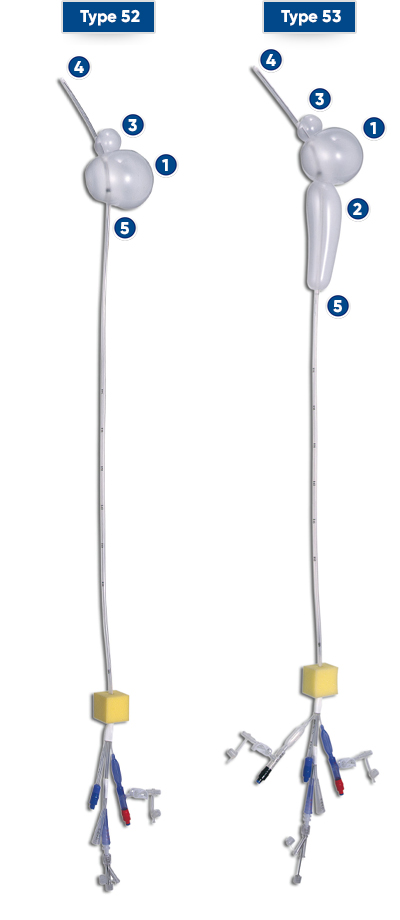
The 52 and 53 model drains are designed with balloons for urgent angiopression to stop bleeding from gastric varices.
Method of application for the blakemore tube
A fixation balloon is installed in these tubes in addition to the balloon intended to stop bleeding from gastric varices.
Insert each balloon into the stomach and pour 60mL of sterilized distilled water into the fixation balloon.
Then slowly inflate the gastric balloon with air and pull the tube back until the balloon presses lightly on the esophagus and stomach junction to secure the tube with a force of 300-500g.
Please note that the 52 tube does not have an esophageal balloon.
1 Gastric balloon
2 Esophageal balloon
3 Fixation balloon
4 Gastric suction port
5 Esophageal suction port
| Type | Reference | Size | External diameter |
| Type 52 | 002.182.5218 | 18Fr | 6.0 |
| Type 53 | 002.182.5318 | 18Fr | 6.0 |
The blakemore tube is an essential medical device, specifically designed to control hemorrhages from esophageal and gastric varices, conditions often related to severe portal hypertension, usually due to liver cirrhosis. Our CE-certified medical probes are available in several models, thus meeting the diverse requirements of emergency clinical situations.
Material and design: our range covers two designs. The Create Medic tubes are made of 100% pure silicone, ensuring high biocompatibility and a flexibility that facilitates insertion and removal without damaging the esophageal mucosa. The Marquat C120PVCS combines a PVC shaft, chosen for its balance of rigidity and flexibility on insertion, with two natural latex balloons, and carries a radiopaque X-ray line along the full length of the shaft.
Balloons: the Create Medic silicone tubes are fitted with low-pressure balloons, with an internal pressure controlled so as not to exceed 40 mm Hg. The Marquat C120PVCS is specified by inflation volumes only, from 15 to 50 mL for the oesophageal balloon and from 40 to 150 mL for the gastric balloon, depending on the reference. In both cases, direct pressure is applied to the varices to control bleeding, and careful monitoring is required throughout use.
Lumens and channels: Designed with several lumens, our probes allow effective aspiration and evacuation of gastric contents, upper esophageal blood, and saliva. They also include balloon confirmation marks and easy-to-use manometric lines, which increase the safety of the operation.
Insertion and use: The Type 42 sengstaken-blakemore tube is equipped with a stylet, allowing faster and safer insertion. As for the type 52 and 53 probes, they are specially designed with balloons for urgent angiopression to stop bleeding from gastric varices.
Monitoring and safety: Our Blakemore tube is designed with patient safety in mind. The manometric lines are color-coded to prevent errors, the probes are equipped with sponge cushions and clamps that facilitate the opening and closing of the manometric line.
Clinical applications: This tube serves as an emergency measure to control bleeding while waiting for other therapeutic interventions. It is generally used for a short duration due to the risk of complications, requiring careful monitoring during its use.