
We support hospitals and clinics with their PRP device needs, with streamlined purchasing and solutions adapted to high volumes.
For independent practitioners and small centers, our products are available in just a few clicks via our online store.
PRP can be obtained through a high centrifugal force, separating cells layer by layer based on their molecular weight.
Platelets can be considered as the repairing cells of our body; they act even on a small skin injury. PRP is simply the concentration of these cells collected in a plasma medium.
T-LAB tubes yield 2 ml of PRP from 9 ml of whole blood. Platelets cause coagulation but also secrete growth factors.
A normal platelet count can be considered around 200,000/microliter, but PRP means the platelet count rises up to 1,000,000 - 1,500,000/microliter.
It can only be applied by qualified physicians and this technique is an autologous procedure.
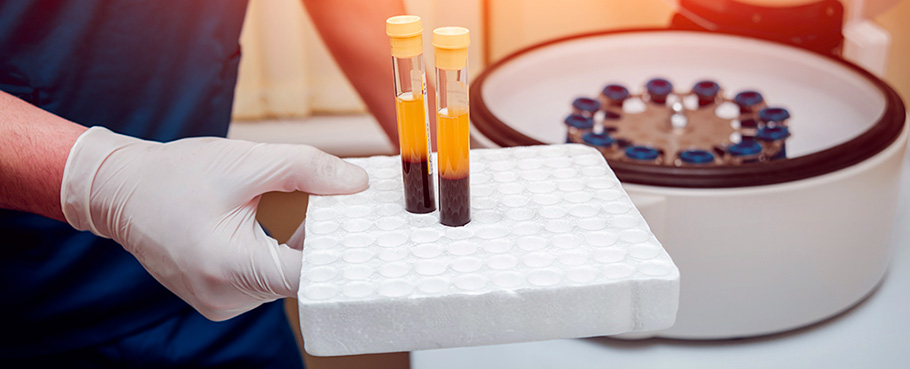
It should not be considered or marketed as a stem cell treatment. However, it may lead stem cells to participate in tissue healing processes. Due to platelet activation, growth factors are secreted.
Its application can lead to the generation of fibroblasts, which can then produce collagen and elastin through a chain reaction. In addition, in autologous fat grafting procedures combined with PRP, it can help support the viability of the grafted tissue.
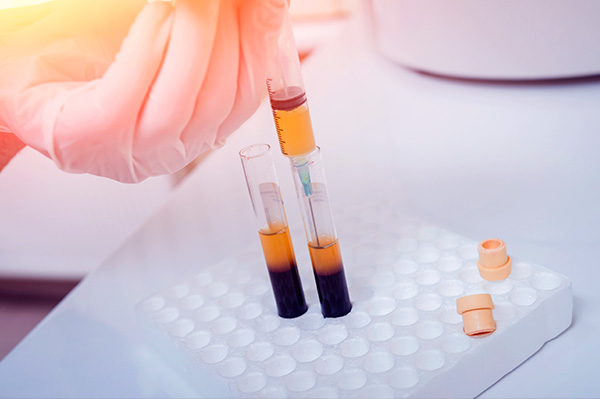
Although it does not have a long history, its application area has expanded quickly. It can be used to stimulate and accelerate the healing of soft tissues and bones in various areas.
In general, plastic and reconstructive surgery, dermatology and orthopedics are the main medical fields where these applications are performed.
Combining with microneedles, combining with lasers in plastic surgery and dermatology, fat grafting in plastic surgery, and joint applications in orthopedics are common examples where PRP is used.

As it is an autologous procedure, no major side effects have been reported, based on various clinical studies.
There are, however, risks linked to improper use. To minimize them, it is essential to carefully follow the manufacturer's instructions and, if needed, consult our instructions for use.
All our PRP and PRX tubes comply with CE standards and contain no drugs. IVD devices are not intended to be reinjected into patients. They have been tested according to EN ISO 10993 biocompatibility standards and have been proven to be non-hemolytic.