
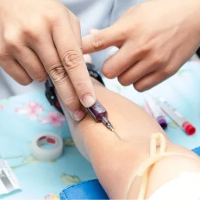
Blood is drawn from the patient's arm into the Platelet-Rich Plasma tube using the T-LAB phlebotomy kit. Each tube has a 10 ml volume, including 1 ml of anticoagulant.
The vacuum makes it easy to collect blood until the vacuum is exhausted. You will therefore obtain a total of 18 ml.
After collection, gently shake both tubes to ensure the anticoagulant mixes properly inside the tube.
About PRP Our PRP products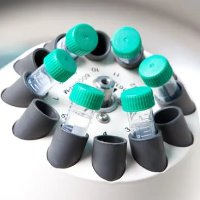
Any centrifuge unit can be used to perform this process. The tubes must be placed correctly to ensure balance during centrifugation. No specific centrifuge device is provided or recommended; however, swinging-bucket rotor centrifuges tend to provide more practical results.
According to the instructions for use, the most important parameter is to perform 1500 G for 8 minutes. Centrifuges typically display RPM (revolutions per minute) rather than G-force, but the relationship between RPM and G can vary depending on the radius of the centrifuge.
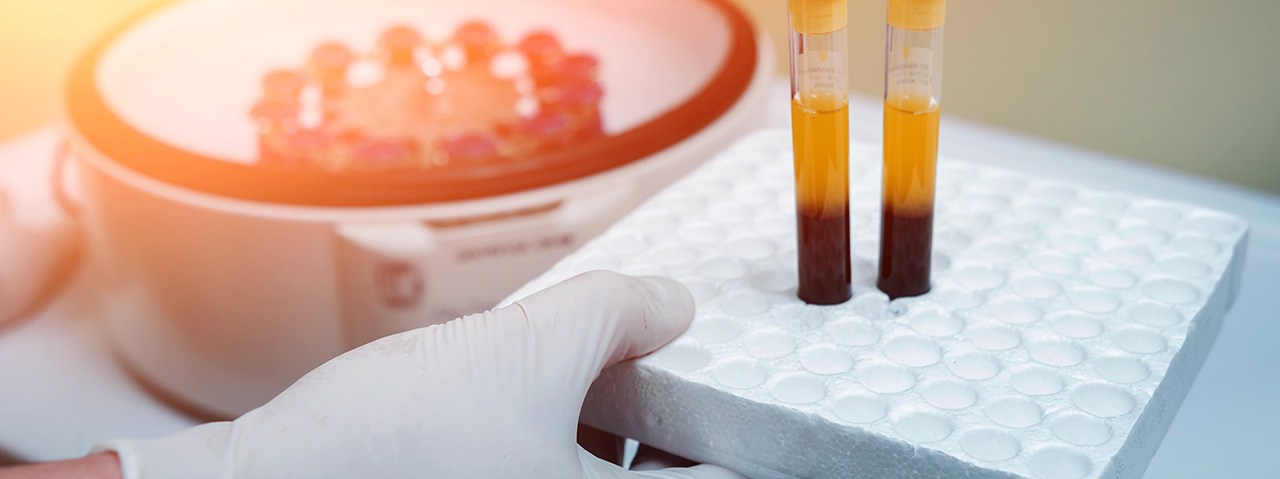
Warning: this step is crucial to obtain PRP. Please do not shake or turn the tubes upside down after centrifugation. If the procedure has been performed correctly, you will see 3 layers inside the tube.
Understanding the layers
The centrifugation process causes cellular layers to separate based on molecular weight.
The red blood cell (RBC) layer forms at the bottom of the tube because RBCs are larger cells than the other components of whole blood.
Just above the RBC layer, there is a very small leukocyte layer (less than 1% of total blood volume), where a possible clot may form.
The upper layer is yellowish. This upper portion includes both PRP and PPP, but these two cannot be distinguished with the naked eye. PRP is defined as a 2 ml volume just above the buffy coat. The top part is PPP.
A long needle is attached to the 5 ml syringe, which is held vertically inside the tube. The tip of the needle is placed directly on the buffy coat layer; PRP is then collected using a gentle “tornado” movement of the needle and syringe.
In total, 2 ml are collected.
It is also recommended to collect a small amount of red blood cells along with the buffy coat and PRP. This is important for cell-to-cell interaction during the resuspension process.